
Components
- 1 bone-in, skin-on chicken breast
- 1 cup (tea) of brown rice
- one potato
- Two carrots
- Two sheets of salt stems (each consisting of one)
- One onion
- 1.5 liters of water
- Two bay leaves
- Two Indian carnations
- Two tablespoons of salt
- oil according to preference
- Add ground pepper gradually, adjusting to your preferred flavor.
- fresh dill for seasoning and serving
Setup phase
- Prepare in advance: peel and dice the carrot into 1 cm cubes. Wash, dry, and slice the leaves 1 cm diagonally – set aside the leaves from one stem. Peel and cut the potato into 1 cm cubes. Halve the onion. Slice one half thinly. Peel the other half and attach the bay leaves to it, securing them with cloves.
- Switch on the electric pressure cooker (without the lid) and add the chicken breast, whole rice, carrot, salt (with the leaves), potato, and the two halves of the onion. Season with salt and pepper, add water, then close the lid. Set the valve to pressure cooking and program it to cook for 7 minutes.
- Once the cooking time is complete, the pressure cooker automatically shuts off and gradually releases the pressure while keeping the contents warm. Important: allow the pressure to release on its own without adjusting the valve until the float shows that it is safe to open the cooker—this process takes approximately 30 minutes. This not only prevents hot broth from spilling through the valve but also lets the ingredients finish cooking.
- Open the pan and, using tongs, remove and discard the salt leaves and broken onion. Place the chicken breast on a plate, remove the skin, and, taking care not to burn yourself, shred half of it with two forks – you can freeze the rest for other dishes.
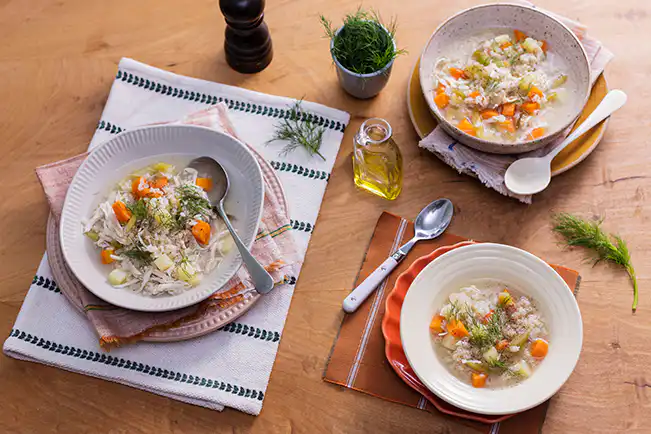
- Add the shredded chicken back into the pan and stir thoroughly. Taste and adjust the salt if needed. Serve the soup with dill, olive oil, and ground pepper to your preference.
In the traditional pressure pan
The quantity of ingredients remains unchanged. Adjust the cooking time: cook for 10 minutes once the pressure is reached. It is crucial to allow the pressure to release naturally (the pan will be quite full and may release steam suddenly).